
Are Designers arguably the most aware group of people? I would imagine the very nature of being a creative and a designer we would notice the finer details of everyday life, surely? Is it not in the role and within the education of a designer, is it in their DNA to notice the fine detail of everyday life? The designer is a breed apart and through education, they are encouraged to experiment and take note, to be aware of the benefits and the rewards of quirks, mannerisms, and design in society. So when asked to notice the ignored, make a conscious effort to look at things in more detail. Slow down a busy life and really take note I asked myself what have I missed, it turns out more than I anticipated. I believe in a mindful approach to life and daily tasks, a walk with the dog should not be a chore but be an opportunity to take note of surroundings and be in the moment. It appears I need to work on this. Being consciously aware and taking note of our surroundings is a difficult task, not entirely due to the nature of it but due to the vast amount of information available to us. Our minds as wonderful as they are, are able to sift through swarms of information that we see and process every second, our mind is able to assess what is essential and what can be discarded.
It was interesting then to reflect on the themes suggested in this weeks lecture from Susanna Edwards. Making reference to the film by John Smith where he appears to dictate and direct a busy street scene. This is the contrasting reality to Smiths view, Smith is located a few miles away from the busy street scene and comments on the actions as they appear through the camera. The film is a document and an archive of this day, it is a snapshot in time and as Smith appears to direct the scene we see a wide range of diverse people, actions gain a snap of 1970’s London. The use of language in the film is also of interest and a can make a comment of the times.
“There is … a fascination with language here, in the way that the description of a scene can be changed into a series of commands to the things in that scene by adding certain words to a descriptive sentence. Nicky Hamlyn in John Smith Film and Video Works 1972–2002, Bristol 2002, p.46.
What we see in this film is a strange sense of reality, the observer questions it is real? Are we lead to believe we are witnesses to a series of directions, this gives a sense of false reality. It raises the argument of perceived reality, what we see or are perceived to be witnessing is only limited to our imagination and we can project our own assumptions into a given situation. This idea of reality and perception is discussed by John Burger, in his documentary series Ways of Seeing
Burger makes a comment on the originality of what we are seeing and how we perceive or even view art. Burger comments on observations and how our perceptions of art can be distorted due to the development of the camera. As a tool to document life, society and culturally relevant material the camera has had a huge impact on modern life. With reference to the series Through this weeks workshop task I too will use the camera to document material and observations, however, I will also take this opportunity to sketch and write details of observation.
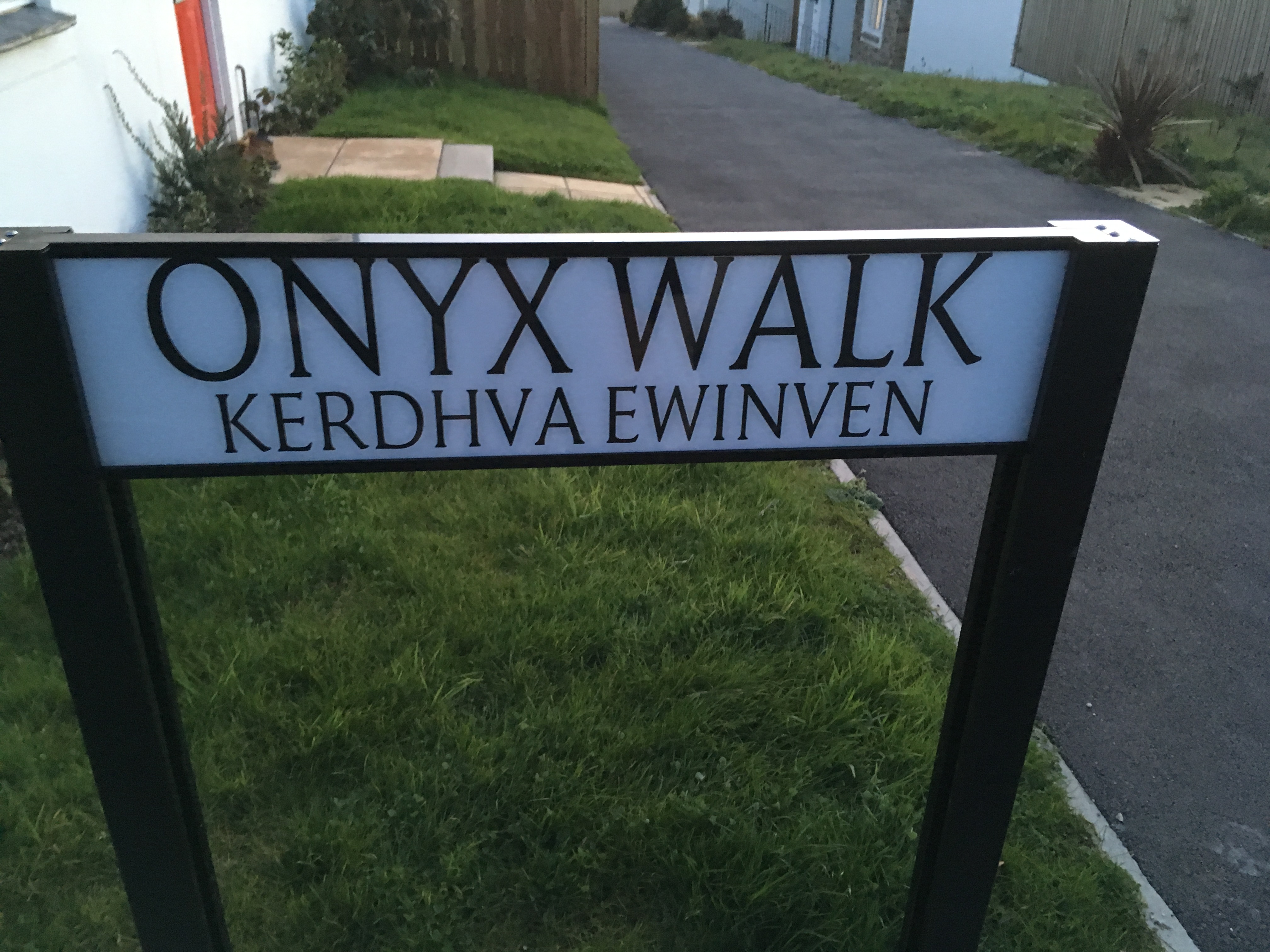
Through a discussion with Susanna this week, we spoke of location and a conversation about street signs, This idea was also discussed by Tom and Kristoffer, they named a photographer who documented street signs throughout London and made comment on their diversity. I too was drawn to street signs when given the theme of looking closer at something local. Being in Cornwall, street signs often have a translation under the English written words. The Cornish language is something of a dying art and like the Welsh language, it is a matter of pride and heritage, it is a case of identity and something that the local, Cornish community believe to be a part of them. To gain a further understanding about this I created a Facebook poll to ask my neighbors, Do you identify yourself as being Cornish? It was interesting to see the split and then start conversations about what the language means to people. As outsiders, not Cornish I and half of my neighbors have no connection with this language and have no understanding about its relationship with the native Cornish. Further to this, I was interested to learn that as a child, one neighbor disclosed that her parents encouraged the language and she can still speak some keywords and phrases. If this language is key to an identity and is something that is being lost through generations of outsiders, is the Cornish identity being lost? or even diluted?


Further research into the Cornish language highlighted that approximately only 500 people are able to speak the language and this is encouraged from a young age at a woodland school daycare. The teacher mixes the use of language and teaches through play and structured activities. Mainstream education does not allow or even encourage the teaching of this language and is not sensitive to local history and identity. I guess the same could be said about most schools, with teachers, myself included moving into areas to fill job roles, we do not have a conscious awareness of the local cultures, history and in this case languages. The Cornish identity is something that is a strong sense of pride and belonging, on application forms one can identify themselves as Cornish rather than English or British. This hidden language has been the focus and interest of mine this week. Something that dates back before the introduction of the English language as we know it has been lost in favor of the mainstream and lost too through the dilution of native Cornish. The Cornish are quick to say unless you have 5 generations here, you are not Cornish. No one is arguing with this, I myself do not see myself as Cornish because this is where I live, I am from Yorkshire and this is how I would identify myself.
So the problem then of making the Cornish language more accessible or even promoting its existence to non-natives is something I aimed to dissect and discover this week. My mind has been lost at points, as to an outcome but also is this the route of my investigations for the workshop challenge. Research has informed this project to an extent that there is a society for the protection of the language, there are government founding channels to promote the language but it is stated that it is not enough to truly ‘save’ the language. It is a language that, by its own followers is stated to be ‘not sustainable’ and does not fit in with our modern lives. So then, maybe this is my challenge, how do I integrate the Cornish language into the everyday lives of the people who have moved here but are not native. Pen and paper it is. I started to really look at this problem thinking that I would design a book, an app or something to teach people Cornish, but that is not the point here. People have to make a conscious effort to do those things, my response should be integral to everyday life and not take extra time or effort. Yes, I have sketchbook pages of ideas, mindmaps, and doodles but still, this problem seemed to be bigger than what I had anticipated.


I think that my design or solution on its own will not entirely solve this issue of the un-noticed or ignored language but I aim that with a series of subtle changes to the visitor experience and too with changes to non-native lives the Cornish language can be celebrated rather than ignored. Okay, so working on the assumption that most people will move to Cornwall based on holidays that they have spent down I was interested in the old Great Western Railway posters that would encourage visitors to the county. This hand-painted, stylised poster has been copied and reproduced as souvenir gifts to take away, is in most gift shops around Cornwall, places such as Padstow have a series of galleries that sell posters in this style.


I began to work on this idea and produce a series of adverts/posters that would use the Cornish language. My initial thoughts were to screen print these posters to add a sense of nostalgia to the final design so my illustration is split into separate screens or colours that enable each to build up the image. In the below image you can see that each element of the illustration is black, this is a key part to the design being screen printed. Each colour would need to be shown as a solid black, this would ensure the screen is properly exposed onto the photo-emulsion, through UV light.


After making this illustration I needed to add the all-important type, this idea hangs on the words and use of language. I had experimented with a series of layout options, using the original GWR posters as inspiration.


The colours I have used enable me to still screen print this using four colours or screens I have been able to keep this relatively simple and by keeping the illustration style flat, this too enables me to keep the screen printing down to only four colours/screens. At this point, the digital illustration and use of colour enabled me to experiment with hues and tones, this is something that I can continue to work on. The principal point of this is to promote the Cornish language, something that his ignored and not noticed by almost half the population of my local area. This is a big assumption but I believe this notion of the language is being ignored by half the population of Cornwall and with a small majority of people speaking the language is it important to the identity of a county to keep this alive? Taking this further I could develop a series of adverts that can be placed in touchpoints of all people who live here or who are visiting. Bus stops, Petrol stations, signs to the beach or even signs on shop fronts, use this language across a range of platforms and media to encourage interactions and conversations to take place. As I stated earlier, this idea itself will not raise sufficient awareness but it is a starting point just as this exercise was, it has the potential to go further.
So, what did I learn through this process? I have enjoyed the sketching and developing an idea, working from an illustration and experimenting with type. This has been a difficult task, maybe the subject wasn’t the best choice but I think that maybe I was unsure at times or that I panicked that I wasn’t noticing things around me. I have been interested in the Cornish language and is something that I have been able to investigate further but I have found it difficult to present a solution that I truly believe meets what I set out to do. This could be due to the fact I wasn’t entirely sure what I wanted to do, maybe I just picked the first thing that I had noticed and rolled with it.


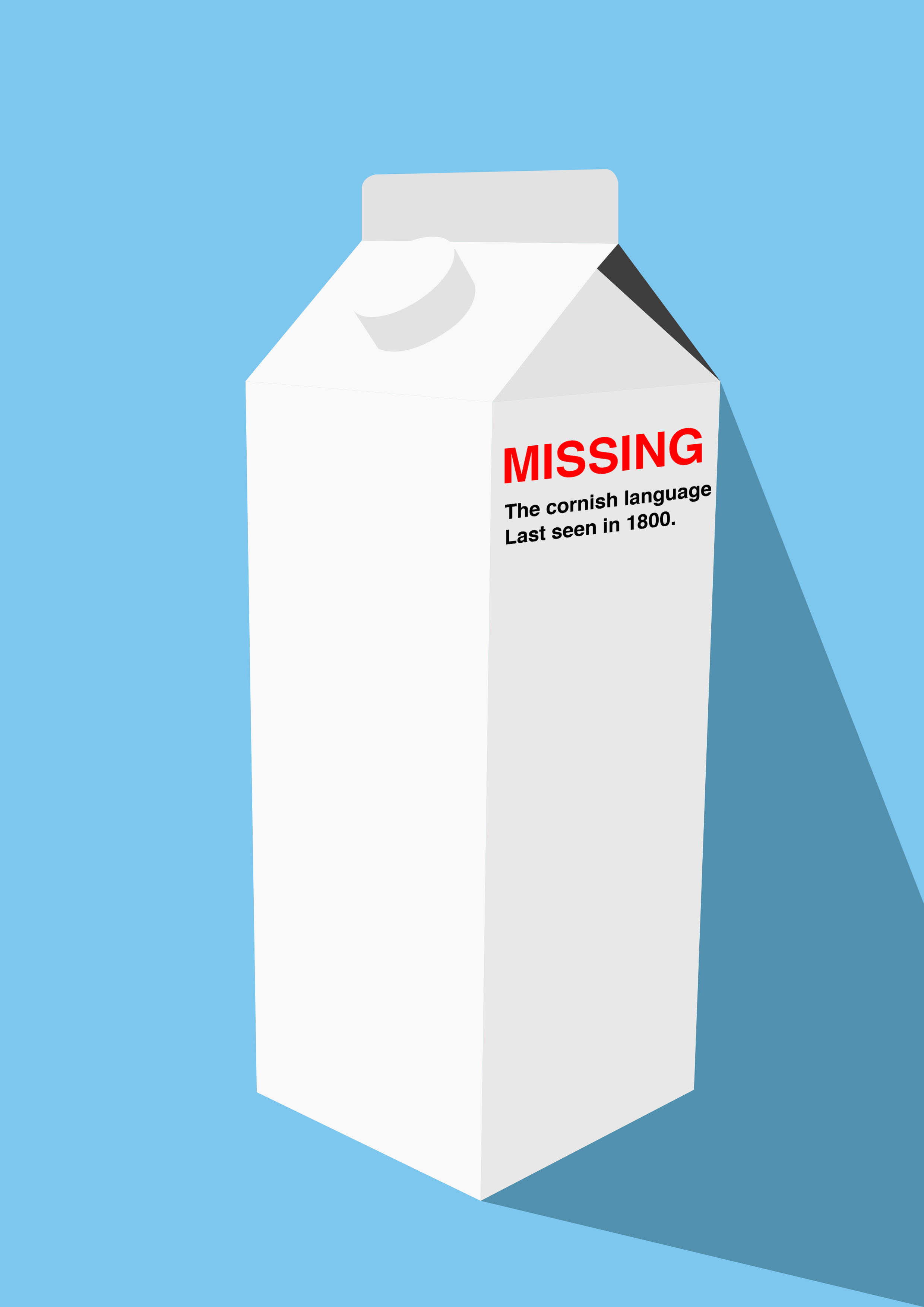
Going back to the drawing board, or art board I have developed a series of type based posters that explore the idea of lost or fragmented type.
This idea comes a few weeks after all of the above, but out on a run with the dog, I had an idea. Sparked by the content of week 9 but fitting for this noticing the ignored.

 Pixels and Serifs.
Noticing the ignored
You are asking questions and seeking answers. I can feel how much you are engaging. Great stuff!! Once again good linking back to our learning material in the context of your own personal thinking and investigations.
Great primary research – getting the perspectives of others on an idea in a short time frame. Your investigation into language and local culture has so much potential. Do you know the work of Craig Oldham? Jeremy Dellar? Martin Parr? Andrew Kotting? It would be good for you to be referencing your own found links in relation to your workshop challenge as it evolves in the week. You should look at the work done in Hul for the city of culture – some amazing work about place.
I would love to see you develop this idea further but you have done so very well to tick all the boxes and to create a designed poster outcome at the end. This project has so much potential!!! I get really exciting to see your blog each week. Thank you for that.
LikeLike